
Current Events | Overdoses are Now Higher than Ever in the US
by Madeline Hilliard, CEO of DopaGE
Overdoses in the US are at an all-time high in 2026.
For the last 3 years, news outlets have been reporting that overdose deaths are finally dropping. Since 2022, they have been and that's what we want to see!
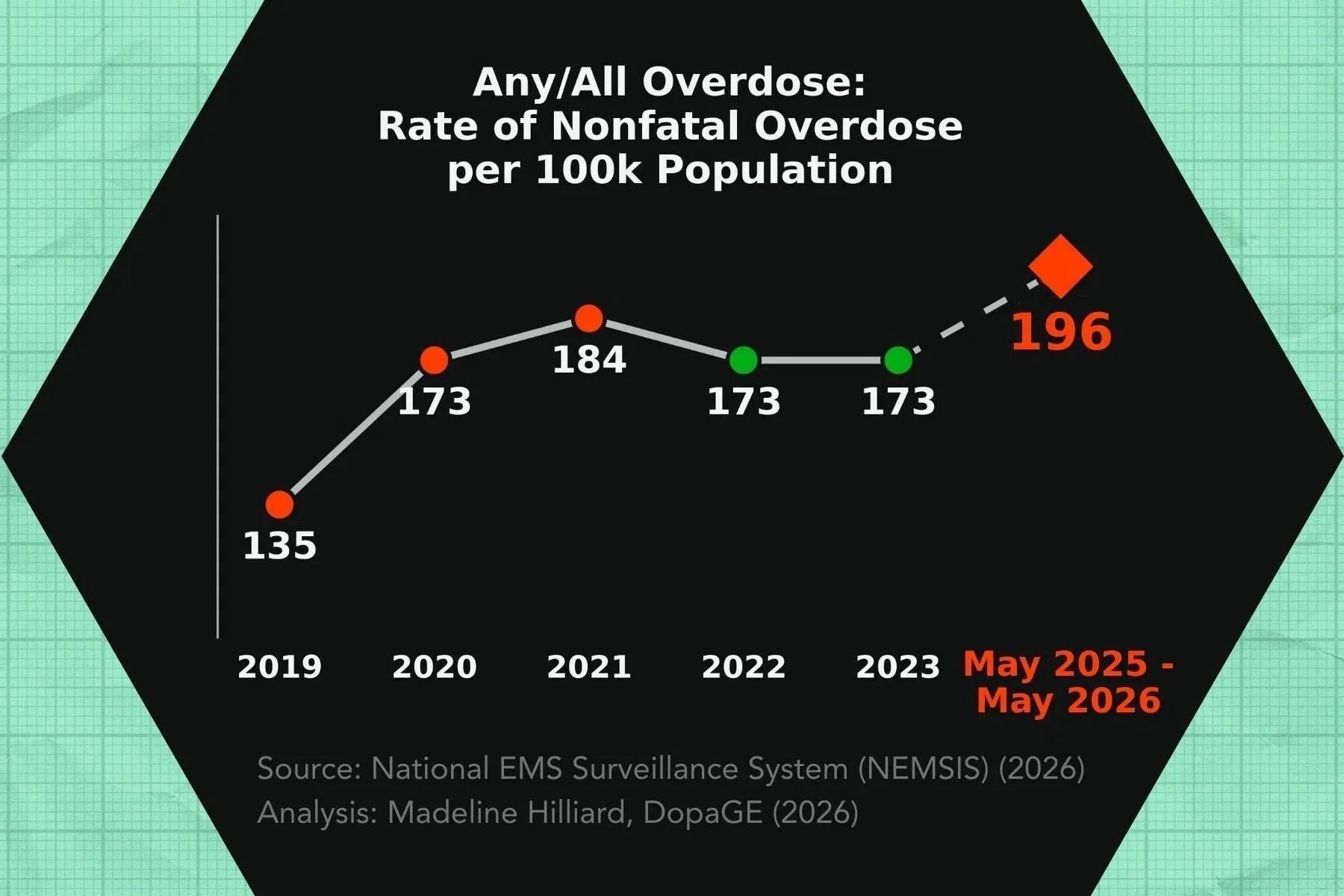
Meanwhile, overdoses themselves - someone's body shutting down because there's too much of a drug in their system - are currently happening at a record rate.
In the 12 months before May 25, 2026 (the latest data):
195.7 non-fatal overdoses per 100k Americans.
In 2021, it was 183.5 per 100k at the height of the pandemic aftermath.
(NEMSIS, 2026)
When the non-fatal counts are combined with the fatal counts for each year, we can see that more overdoses are happening now than ever — despite fewer of them being fatal.
That shows us exactly where we are making an impact through public health interventions and where we are not:
The rescue side is working. Naloxone is more accessible than it has ever been, increasing numbers of bystanders are trained to use it, and so a larger proportion of individuals are surviving the moment of max crisis. We celebrate that hard-fought progress, and are doubling down on what's gotten us there — because there are still tens of thousands of fatalities each year, all of them preventable. Simultaneously…
Overdoses being higher than ever in 2025-26 indicates that prevention - keeping people out of life-threatening situations before they happen - is still not solved.
63% of all accidental overdose fatalities in 2024 — the latest finalized data on mortality — involved fentanyl.
For 15-30 year olds, a staggering 78% of accidental overdose fatalities involved fentanyl. The vast majority of those young people had no intention of taking an opioid at all (CDC WONDER, 2026).
Prevention is comprehensive drug education, substance literacy - on illicit drugs where fentanyl exposure happens, fentanyl test strips, and bystander training. The need to successfully scale access to these public health interventions is as urgent — and as possible — as it was for naloxone.
Naloxone access is mitigating overdose deaths, and needs to continue to do so. But naloxone is a treatment, it cannot prevent overdoses themselves from occurring. That is the job of prevention, where the data indicate that widespread access to substance literacy education is what’s still missing. Now is the time to shift our focus toward ensuring access to prevention training, to push overdoses in their entirety onto the same trendline that the deaths are now showing — most recently a 24% year-over-year decrease (CDC WONDER, 2026).
Not every problem in the world is within our power to solve, but overdoses are. They're preventable before becoming fatal, they're preventable before they happen at all, and each of us can be part of that within our own communities.