
Current Events | The Call That Saved 7 Lives: Lessons from Providence College Overdoses
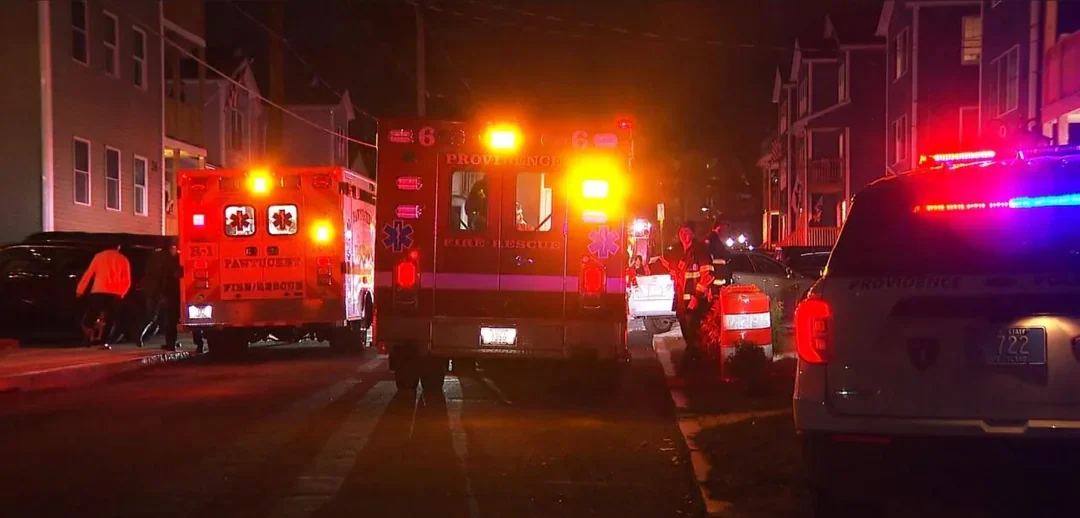
On Friday, December 5, seven Providence College students overdosed on fentanyl-contaminated cocaine. All seven survived. The university spokesperson thanked first responders and college public safety officials for their swift action, and rightfully so—naloxone administration saved these young lives (Hall & Schooley, 2025). But there's someone else who deserves our gratitude, someone whose name we may never know: the person who called 911.
Without that brave individual’s call, first responders would not have known there was an emergency to respond to. No matter how skilled or well-equipped, they could not have helped if they were not aware that seven students were dying. That phone call was the first link in a chain of survival.
The Lifeline of Good Samaritan Laws and the Caller Who Used Them
The person who called 911 made a choice in a moment of crisis. They likely faced fears that have stopped many others from making the same choice: Will I get in trouble? Will my friends get arrested? Will we be expelled? These fears are real, and in emergencies involving substances, they can be deadly. People hesitate. They wait. They hope the situation will improve on its own. And in those minutes, lives hang in the balance.
This is precisely why Good Samaritan Laws exist. These laws provide legal protections for individuals who call for emergency medical assistance during an overdose. While specific protections vary by state, they generally shield callers and the person experiencing an overdose from arrest or prosecution for possession of controlled substances intended for personal use.
The caller in the Providence College incident—whether they knew about Rhode Island's Good Samaritan Law or simply acted on instinct—enabled the entire rescue response. Their call dispatched emergency services. Emergency services administered naloxone. Seven students were alive when their families picked them up from the hospital. The caller’s choice is made more victorious by Providence Police’s report that all seven students were conscious and alert at the hospital (GoLocalProv, 2025). This means that little to no hypoxic brain injury occurred.
That detail matters more than many may realize. In an opioid overdose, breathing slows and eventually stops, depriving the brain of oxygen. If too much time passes, even if naloxone reverses the overdose to save the victim’s life, brain damage from oxygen deprivation cause permanent disability. The fact that all seven students were alert at the hospital indicates the call was placed rapidly — before the overdosing students stopped breathing long enough to cause lasting harm. Not only did the caller’s swift action save seven lives, they protected seven young people’s futures.
When Fentanyl Education is not Enough
Arrest records show three individuals are suspected to be responsible for selling the students the drugs that led to their overdoses. Two suspects were charged with "possession with intent to deliver cocaine" alongside fentanyl and firearm charges; one of whom was charged with "unlawful delivery of cocaine" (Turn To 10 News, 2025). The evidence indicates the students who overdosed thought they were using cocaine, but it was contaminated with fentanyl without their knowledge. In 2023, 10% of cocaine samples in Rhode Island contained fentanyl (Lim et al., 2024).
Providence College student Grace Condon, who wasn't involved in the incident, shared her takeaway: "You hear about it in the news happening to other people and you don't think it can happen to you until it does. It’s scary… the fact that it happened so close to you when you think you're safe from that and everyone needs to be aware of this because it can happen to anyone," (CBS Boston, 2025).
Grace is correct, this can happen to any young person who experiments with cocaine or other substance use. Fentanyl education alone isn't enough. Students need evidence-based training on the variety of high-risk substances young adults commonly encounter, like cocaine, MDMA, counterfeit prescription pills, and alcohol—including contamination risks, harm reduction strategies like fentanyl test strips, and overdose response protocol. When students understand the full picture, they can make informed decisions. Some might decide the risk isn't worth it. Others might use test strips. Both outcomes prevent overdoses.
Demand is the Root Cause, Prevention Training is the Solution
Law enforcement and government agencies invest enormous resources in reducing the supply of illicit drugs. Despite these efforts, substances remain widely available and overdoses continue to cause suffering. This isn't a failure of enforcement, it's basic economics. As long as demand for illicit substances exists, supply will find a way to meet it.
Non-judgmental prevention education is the only intervention that successfully addresses demand itself. A student at the University of Southern California shared their testimony with a volunteer of Team Awareness Combating Overdose (TACO), a nonprofit that distributes free fentanyl test strips on college campuses: "I'm too scared to use drugs myself, but since being able to give these test strips to my friends and helping them understand they need to use them on the drugs people give them, they are using drugs way less often and most of them have stopped entirely because now they've decided it's not worth it."
When students have access to prevention tools and understand how to use them, not only do they dispose of fentanyl-contaminated substances, many stop using illicit substances entirely through their decision that the potentially-fatal risk outweighs the temporary benefit of a high. This is what comprehensive overdose prevention training looks like in practice: meeting young people where they are with information and tools they can actually use, and trusting them to make better decisions with better information.
Seven Lives and the Path Forward
Seven students are alive today because someone made a phone call. Seven students avoided permanent brain damage because that call was made immediately. But how many incidents like this could be prevented entirely with comprehensive, non-judgmental education?
Both approaches are necessary: emergency response preparation and evidence-based prevention education that reduces risk-taking behaviors in the first place.
The Providence College incident is a wake-up call to systematically address the gaps in the current approach to youth substance use education with comprehensive, evidence-based training that treats young adults as partners in their own safety rather than problems to be solved.
Seven families still have their students. Every family deserves to be able to say the same.
The DopaGE Overdose Prevention Portal provides physician-developed, gamified digital training on Cocaine, Fentanyl Overdose Response, and other critical topics for modern substance use safety among young adults. Learn more at dopa.ge
References
GoLocalProv. (2025, December 6). Multiple PC students hospitalized, treated for drug overdoses. https://www.golocalprov.com/news/multiple-pc-students-hospitalized-treated-for-drug-overdoses
Hall, L., & Schooley, M. (2025, December 8). 7 providence college students overdose during off-campus party, police make 3 arrests. CBS News. https://www.cbsnews.com/boston/news/providence-college-overdose-arrests-rhode-island/
Lim, T. Y., Dong, H., Stringfellow, E., Hasgul, Z., Park, J., Glos, L., Kazemi, R., & Jalali, M. S. (2024). Temporal and spatial trends of fentanyl co-occurrence in the illicit drug supply in the United States: A serial cross-sectional analysis. The Lancet Regional Health - Americas, 39. https://doi.org/10.1016/j.lana.2024.100898
Turn To 10 News. (2025, December 7). Three charged after off-campus overdose incident in Providence. https://turnto10.com/news/local/three-charged-after-off-campus-overdose-incident-in-providence
Image courtesy of wpri.com